
White Laser Wick (LEP): The Future of Flashlights
There’s a quiet revolution happening in the world of portable lighting, and it goes by the name of LEP – Laser Excited Phosphor. You may have heard it called “white laser wick” technology, and if you haven’t yet, you will soon. At Lightsaver, we believe in putting the best technology in your hands, and LEP is the most significant leap forward in flashlight and spotlight technology in years.
So what exactly is it, how does it differ from the COB and LED lights you already know, and why should you care? Let’s break it down.
What Is LEP (White Laser Wick) Technology?
LEP stands for Laser Excited Phosphor. The “wick” refers to a tiny phosphor element, often no larger than a grain of rice, that is excited (energised) by a high-intensity violet or blue laser diode. When the laser beam strikes the phosphor wick, it converts that energy into an extraordinarily bright, focused beam of white light.
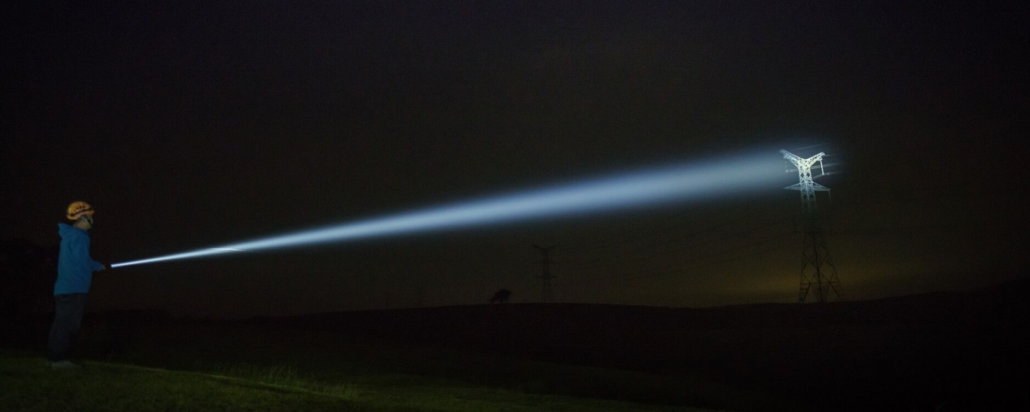
The result? A highly focused, intensely pure beam that can throw light over distances that conventional LED or COB torches simply cannot match.
Think of it like this: where an LED floods a room with light, an LEP launches light down a corridor, across a field, or into the distance like a precision instrument.

How Does LEP Compare to LED and COB?
LED (Light Emitting Diode)
LED technology transformed lighting when it went mainstream. LEDs are energy-efficient, long-lasting, and produce excellent general-purpose illumination. Most quality flashlights, headlamps, and work lights today use LED emitters.
Strengths of LED:
- Wide flood beam, great for close-range and area lighting
- Excellent energy efficiency
- Long lifespan (50,000+ hours)
- Available in a huge range of colour temperatures
- Very affordable
Limitations of LED:
- Throw distance is limited – light disperses quickly
- Difficult to collimate into a tight, long-range beam
- Intensity (lux at distance) drops off sharply
COB (Chip-on-Board)
COB takes multiple LED chips and mounts them directly onto a single substrate, creating a single, high-density light source. This produces a very bright, broad flood of light, perfect for area lighting, work lights, and floodlights.
Strengths of COB:
- Extremely high lumen output in a compact area
- Smooth, even light distribution
- Great for close-range and wide-area lighting
- Cost-effective for high-brightness applications
Limitations of COB:
- Even harder to focus than single LEDs, the large emitter surface resists tight beam formation
- Not suitable for long-range throw
- Runs warmer and requires good thermal management
LEP – White Laser Wick
LEP is fundamentally different from both. Because the phosphor wick is so tiny (a near-point light source), it can be focused by a lens or reflector into an extraordinarily tight beam with almost no divergence. This means light travels far further before spreading out.
Strengths of LEP:
- Exceptional throw distance – LEP torches regularly achieve 1,000m+ beam reach
- Ultra-high intensity (lux) at long range – far surpassing LED at distance
- Near-point light source – allows tight, precise beam collimation
- Pure white, high-CRI light – excellent colour rendering at distance
- Impressive efficiency at high output levels
Limitations of LEP:
- Less effective as a flood/area light – it’s a long-throw specialist
- Typically higher cost than LED equivalents
- The laser component requires safe-use awareness (never shine directly into eyes)
Head-to-Head: LEP vs LED vs COB at a Glance
| Feature | LED | COB | LEP |
|---|---|---|---|
| Best use | General purpose | Area/flood lighting | Long-range throw |
| Beam type | Flood to throw | Wide flood | Tight, focused |
| Throw distance | Moderate | Low | Exceptional |
| Lux at 100m+ | Low–moderate | Very low | Very high |
| Energy efficiency | Excellent | Good | Excellent at high output |
| Light source size | Small | Large | Near-point (tiny wick) |
| Cost | Low–moderate | Low–moderate | Premium |
| Lifespan | Very long | Very long | Very long |
Why Would You Choose LEP?
LEP torches are not for everyone – they’re specialists. But for the right applications, nothing else comes close.
Choose an LEP torch if you need to:
- Search over long distances – security, search and rescue, farm patrol, or wildlife spotting at night
- Signal or identify objects far away – marine use, or large property surveillance
- Cut through adverse conditions – the tight, intense beam of an LEP penetrates light fog, dust, and smoke more effectively than a broad flood beam
- Impress and perform – LEP torches produce a visually striking, pencil-thin beam of pure white light that no LED torch can replicate
If you’re doing close-range camp lighting, reading in a tent, or illuminating a workshop, stick with a quality COB or LED. But if you’re scanning dark ground from a vehicle, monitoring a large property, or need a torch that genuinely reaches where others give up, LEP is your technology.
Lightsaver’s LEP Torch: The LS-219

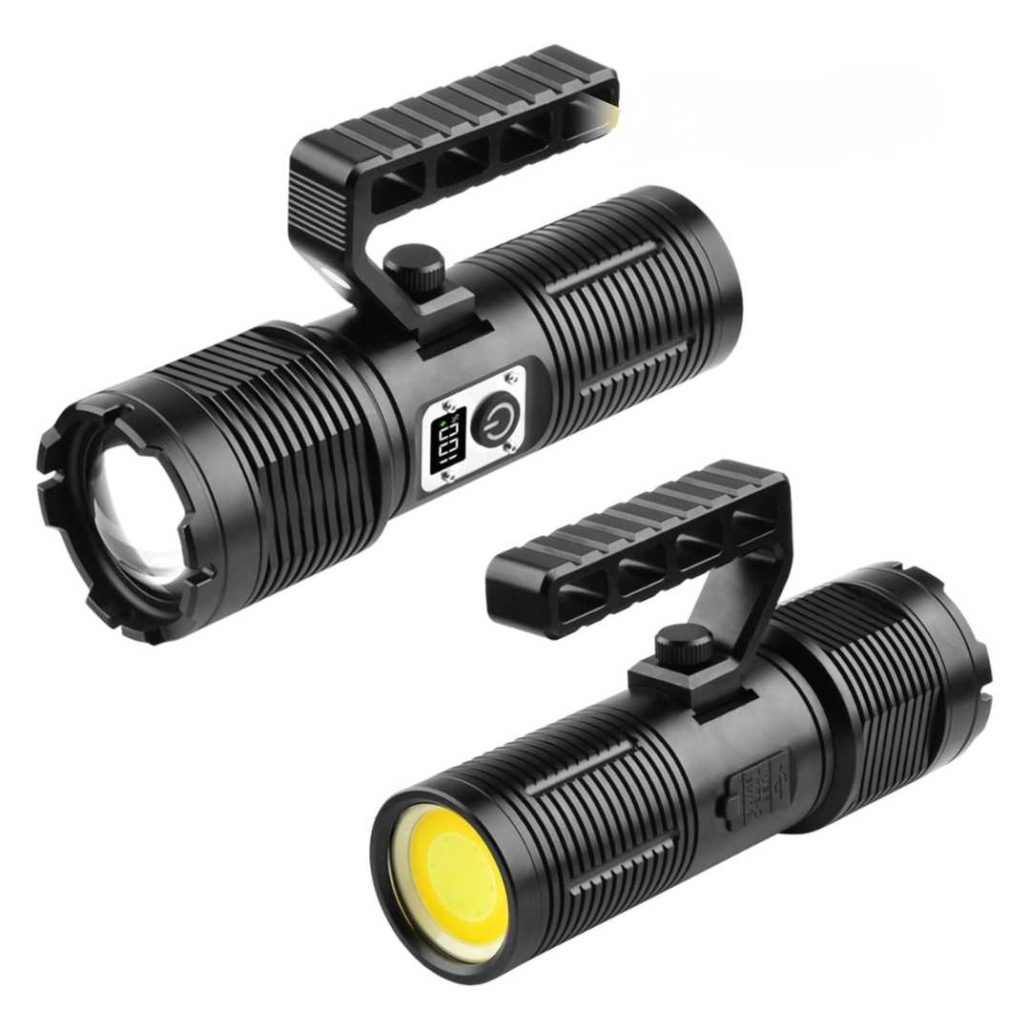
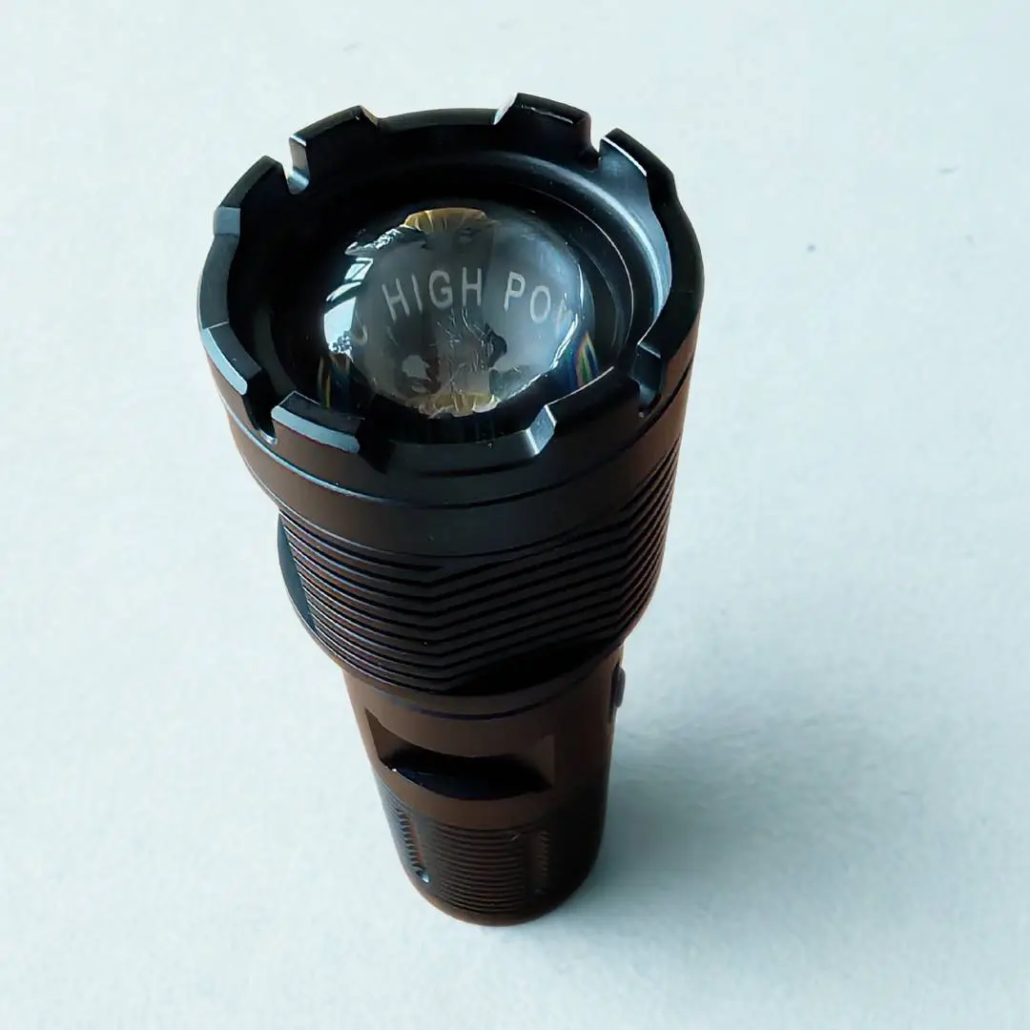


We’re proud to offer the LightSaver LS-219 Rechargeable LEP Spotlight, and it’s not just any LEP flashlight. The LS-219 is a genuinely dual-purpose light, built with both technologies described in this article working together in one rugged, rechargeable package.
At one end, the LEP white laser wick delivers that piercing, long-distance throw, ideal for scanning distant ground, identifying objects hundreds of metres away, or cutting through the dark on large properties. Flip it around, and the COB array on the opposite end floods your immediate surroundings with broad, even area light, perfect for working under a vehicle bonnet, lighting up a campsite, or illuminating a room during a power outage.
It’s the rare flashlight that genuinely does both jobs well, without compromise. You don’t have to choose between throw and flood, the LS-219 gives you both, in one hand, whenever you need either.
Built for real-world South African conditions, whether you’re on the farm, at a remote site, or need serious reach, the LS-219 is the most versatile torch in its class.

Leave a Reply
Want to join the discussion?Feel free to contribute!